Architecting Endpoint Security Layers for Synchronized Content Workflows in Distributed Online Wagering Evaluation Platforms
Written by Erik Albrecht · Oct 10, 2026
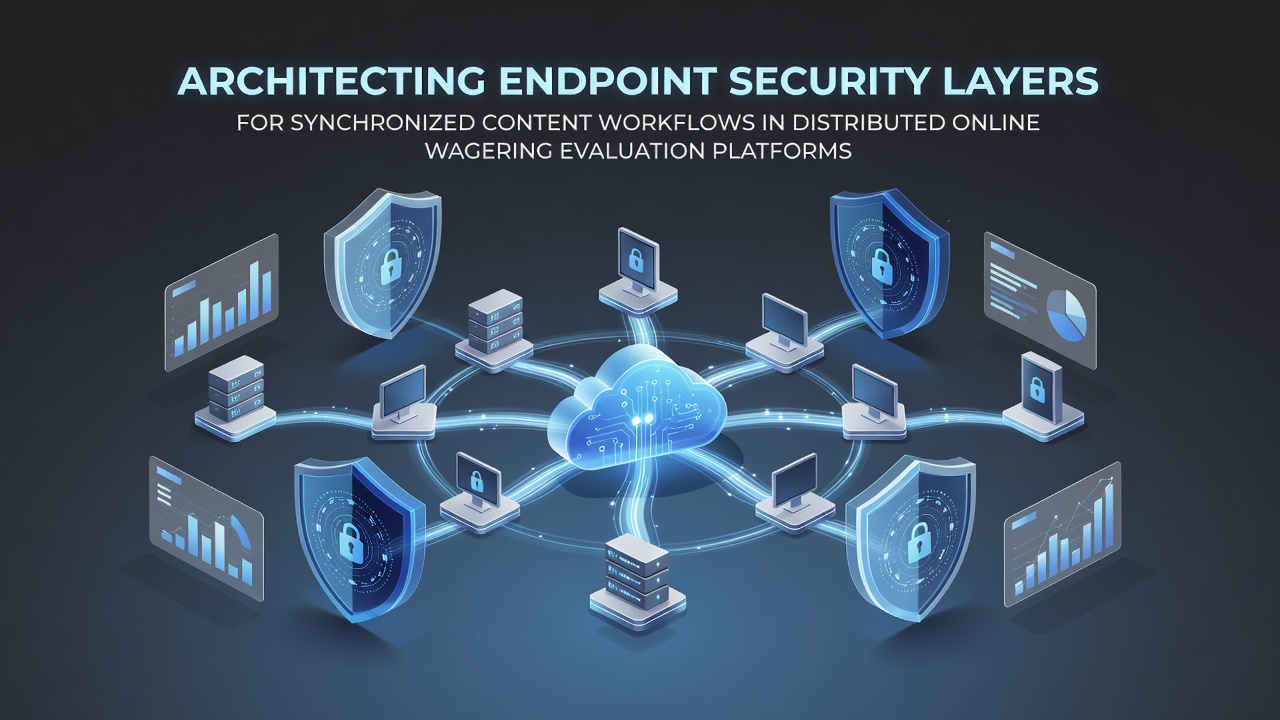
Architecting Endpoint Security Layers for Synchronized Content Workflows in Distributed Online Wagering Evaluation Platforms
Distributed online wagering evaluation platforms rely on multiple endpoints that exchange content in real time, and architects address this by building security layers that protect each node while maintaining workflow synchronization across regions. These platforms aggregate reviews, odds data, and user-generated evaluations from servers located in different jurisdictions, so endpoint protection must handle authentication, encryption, and access controls without interrupting the continuous flow of updates. Data indicates that systems operating in this environment process thousands of content synchronization requests daily, which makes isolated security failures capable of cascading through the entire network.
Core Components of Endpoint Security Layers
Endpoint security begins with device-level controls that verify every connection before any content exchange occurs, and researchers at government agencies such as the National Institute of Standards and Technology have documented frameworks that combine multi-factor authentication with behavioral monitoring to detect anomalies during synchronization. Each layer adds a distinct function: the outer perimeter manages network traffic filtering, the middle layer enforces policy-based access to content repositories, and the inner layer secures local data stores on individual evaluation nodes. Observers note that this tiered approach allows platforms to isolate compromised endpoints quickly while the remaining nodes continue processing synchronized updates from other sources.
Encryption protocols form another essential component because content workflows transmit sensitive evaluation metrics and user interaction logs between distributed sites. Standards developed by organizations including the European Union Agency for Cybersecurity specify requirements for end-to-end encryption that remains active throughout the synchronization cycle, and implementations often incorporate certificate pinning to prevent interception at any single endpoint. Platforms that adopted these measures in 2025 reported fewer unauthorized access attempts, according to industry reports compiled by regional gaming associations.
Synchronizing Content Across Distributed Nodes
Content synchronization in wagering evaluation platforms requires endpoints to exchange structured data sets such as updated review scores, regulatory compliance notes, and promotional material without introducing version conflicts. Architects achieve this by deploying middleware that validates incoming payloads against predefined schemas before they reach local databases, and this validation occurs at every participating node to maintain consistency. Studies from academic institutions examining large-scale content networks show that synchronized workflows experience reduced latency when security checks run in parallel rather than sequentially across the endpoint chain.

As of October 2026 several platforms have integrated real-time logging mechanisms that record every synchronization event at the endpoint level, creating audit trails that regulatory bodies in Australia and Canada can review during compliance assessments. These logs capture timestamps, source identifiers, and cryptographic hashes, which enables rapid identification of discrepancies that might indicate tampering. The approach supports continuous operation because failed endpoints can be quarantined while the rest of the network proceeds with verified content exchanges.
Addressing Common Vulnerabilities in Evaluation Platforms
Distributed environments face risks from both external threats and internal misconfigurations, and architects mitigate these by enforcing least-privilege principles at every endpoint. Access rights are granted only for the duration of a specific synchronization task, after which credentials are revoked automatically through centralized policy servers. Reports from research institutions tracking cybersecurity incidents in the gaming sector reveal that platforms using dynamic privilege management experienced fewer data exposure events compared with static permission models.
Monitoring tools integrated into endpoint layers provide visibility into traffic patterns that deviate from established baselines, and alerts trigger when synchronization requests originate from unexpected geographic locations or carry unusual payload sizes. This capability proves useful in environments where evaluation content updates arrive from multiple affiliate sites operating under different regulatory frameworks. Those who maintain these platforms often combine automated detection with periodic manual reviews to refine detection thresholds over time.
Implementation Considerations for Scalable Architectures
Scaling endpoint security requires modular designs that accommodate additional nodes without requiring complete re-architecture of existing layers, and containerized deployment methods allow new evaluation endpoints to inherit the same security policies from a central template. This method reduces configuration drift that can occur when teams manage separate instances across regions. Figures from technology research groups indicate that modular approaches cut deployment times for new synchronization endpoints by measurable margins in production environments.
Testing procedures include simulated synchronization failures at individual endpoints to verify that security layers respond correctly without halting overall workflow progress, and results from such tests inform adjustments to failover mechanisms. Platforms that conduct regular stress evaluations maintain higher uptime rates during peak content update periods, according to data shared by international gaming technology consortia.
Conclusion
Architecting endpoint security layers for synchronized content workflows in distributed online wagering evaluation platforms involves combining authentication, encryption, access controls, and monitoring into a cohesive system that protects each node while preserving data flow across the network. Current implementations draw on established standards from multiple regulatory and research sources to address both immediate threats and long-term scalability needs, and ongoing refinements continue as platforms expand their geographic reach. The resulting architectures support reliable content exchange while meeting the operational demands of evaluation environments operating in October 2026 and beyond.