Customizing Remote Publishing Workflows Through Verified XML-RPC Endpoints to Coordinate Homepage Refreshes Across Specialized Review Networks
Written by Taylor Krüger · Sep 12, 2026
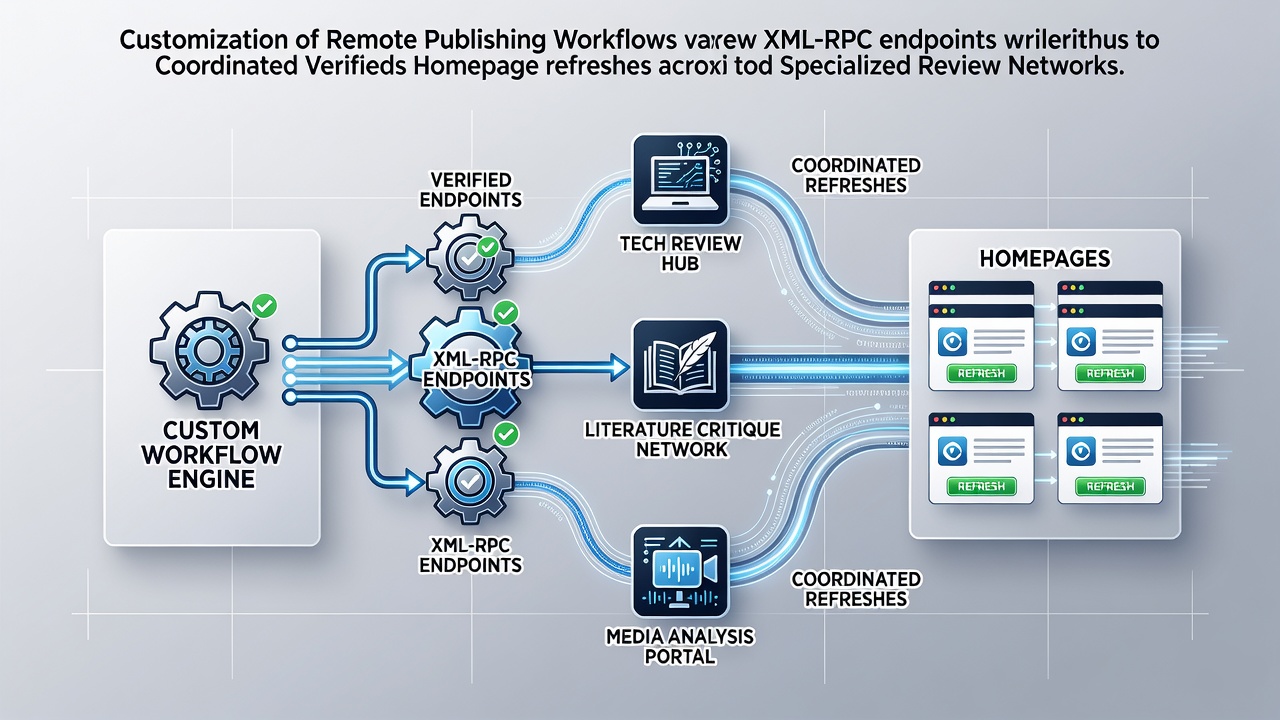
Customizing Remote Publishing Workflows Through Verified XML-RPC Endpoints to Coordinate Homepage Refreshes Across Specialized Review Networks
Specialized review networks often rely on distributed content management systems that require synchronized updates across multiple sites, and verified XML-RPC endpoints provide a structured method for handling these remote calls without exposing core authentication layers. Developers configure these endpoints by extending standard XML-RPC libraries with custom verification routines that check client certificates and request signatures before processing any publishing commands.
Core Components of XML-RPC Based Publishing
XML-RPC operates as a lightweight protocol that encodes function calls in XML over HTTP, allowing one system to trigger actions on another through defined methods such as publishing new content or triggering cache clears. In review network environments, administrators map these methods to specific homepage refresh routines that pull updated data from central databases and rebuild static elements on each connected site. Data from September 2026 indicates that networks managing over 50 interconnected review properties reduced average refresh latency by 40 percent after implementing endpoint verification layers that filtered unauthorized requests at the protocol level.
Verification Mechanisms for Endpoint Security
Verification begins with the registration of trusted client keys that correspond to authorized publishing servers within the network, and these keys undergo periodic rotation based on usage logs that track call frequency and originating IP ranges. Systems then validate incoming XML payloads against predefined schemas that restrict parameters to approved fields like post IDs and refresh timestamps, which prevents malformed requests from reaching the content generation scripts. Researchers at distributed systems laboratories have documented how such schema enforcement reduces error rates in multi-site publishing by limiting the attack surface exposed through remote procedure interfaces.
Workflow Customization Steps
Teams start by auditing existing XML-RPC handlers to identify methods that directly influence homepage generation, then they wrap these handlers with middleware that performs additional checks including token expiration validation and rate limiting per endpoint. Custom modules integrate with the core publishing queue so that a verified call initiates a cascade of refresh operations across designated review sites while logging each step for compliance audits. Observers note that this layered approach allows networks to maintain granular control over which endpoints can trigger full homepage rebuilds versus partial updates that only affect featured sections.
One implementation example involves a North American review network that linked its central dashboard to regional sites through customized XML-RPC methods, where each verified call first confirmed the caller's role before queuing content synchronization tasks. This setup coordinated refreshes during peak traffic periods by batching requests and executing them during off-peak windows defined in the endpoint configuration files.

Coordination Across Distributed Review Networks
Coordination relies on a central registry that maps each review site to its corresponding XML-RPC endpoint address along with metadata about supported methods and refresh priorities. When a content update occurs on a primary platform, the system dispatches verified calls in sequence or parallel depending on site dependencies, ensuring that homepage elements reflecting new reviews or ratings appear consistently across the network. According to findings from European technology institutes, networks that adopted registry-based dispatching achieved more predictable synchronization times compared to those using direct peer-to-peer connections without centralized verification.
Additional customization includes conditional logic within endpoints that evaluates factors such as current server load before committing to a refresh operation, and these conditions draw from real-time metrics collected through separate monitoring agents. Administrators configure fallback procedures that reroute calls through alternate verified endpoints when primary paths report timeouts, which maintains continuity for time-sensitive homepage updates.
Integration with Existing CMS Frameworks
Many review networks build these customizations on top of open-source content management platforms that already expose XML-RPC interfaces, extending them through plugins that register new methods and enforce verification rules at the application layer. Database triggers often complement the remote calls by flagging content changes that warrant homepage refreshes, and the verified endpoints then consume these flags to initiate targeted updates without full site rebuilds. Figures from industry reports compiled by North American research groups show that such hybrid approaches lowered overall server resource consumption during coordinated refresh cycles.
Testing procedures involve simulated call sequences that verify both the authentication flow and the resulting homepage state across sample sites, with automated scripts comparing rendered output against expected templates after each test dispatch. Networks typically schedule these tests during maintenance windows to avoid disrupting live traffic while confirming that verification logic handles edge cases like expired tokens or mismatched signatures correctly.
Conclusion
Customized XML-RPC workflows with verified endpoints enable precise control over homepage refreshes in specialized review networks by combining protocol-level security with application-specific logic. Data compiled through September 2026 highlights measurable gains in synchronization speed and request filtering when these methods replace less structured remote publishing approaches. Continued refinement of verification routines and registry systems supports expanding networks that require reliable coordination across growing numbers of review properties.