Refining Taxonomy Structures for Efficient Game Provider Comparisons in Distributed Casino Affiliate Networks
Written by Anna Krause · Oct 24, 2026

Refining Taxonomy Structures for Efficient Game Provider Comparisons in Distributed Casino Affiliate Networks
Distributed casino affiliate networks rely on consistent data organization to handle comparisons between game providers such as slot developers, table game studios, and live dealer operators, and refined taxonomy structures support this process by creating clear hierarchical categories that allow rapid filtering and side-by-side evaluation. Researchers have observed that standard taxonomies often group providers by broad genres alone, which creates overlap when networks span multiple sites with varying traffic patterns and user demographics.
Current Challenges in Provider Categorization
Many affiliate systems still use legacy classification methods that place providers into single buckets without accounting for hybrid offerings, regional licensing variations, or content updates that occur throughout the year, and this approach slows down query responses when users search across dozens of partner sites simultaneously. Data from the Nevada Gaming Control Board reveals that provider portfolios expanded by over 18 percent between 2024 and 2026, which means older taxonomies quickly become outdated and require restructuring to maintain search accuracy.
Observers note that inconsistencies arise when one node in the network labels a provider under "video slots" while another uses "reel games," and these mismatches produce duplicate results or missed listings during automated comparison tools. The reality is that distributed environments amplify small labeling differences because synchronization scripts pull from a shared but loosely governed database.
Methods for Building Refined Taxonomies
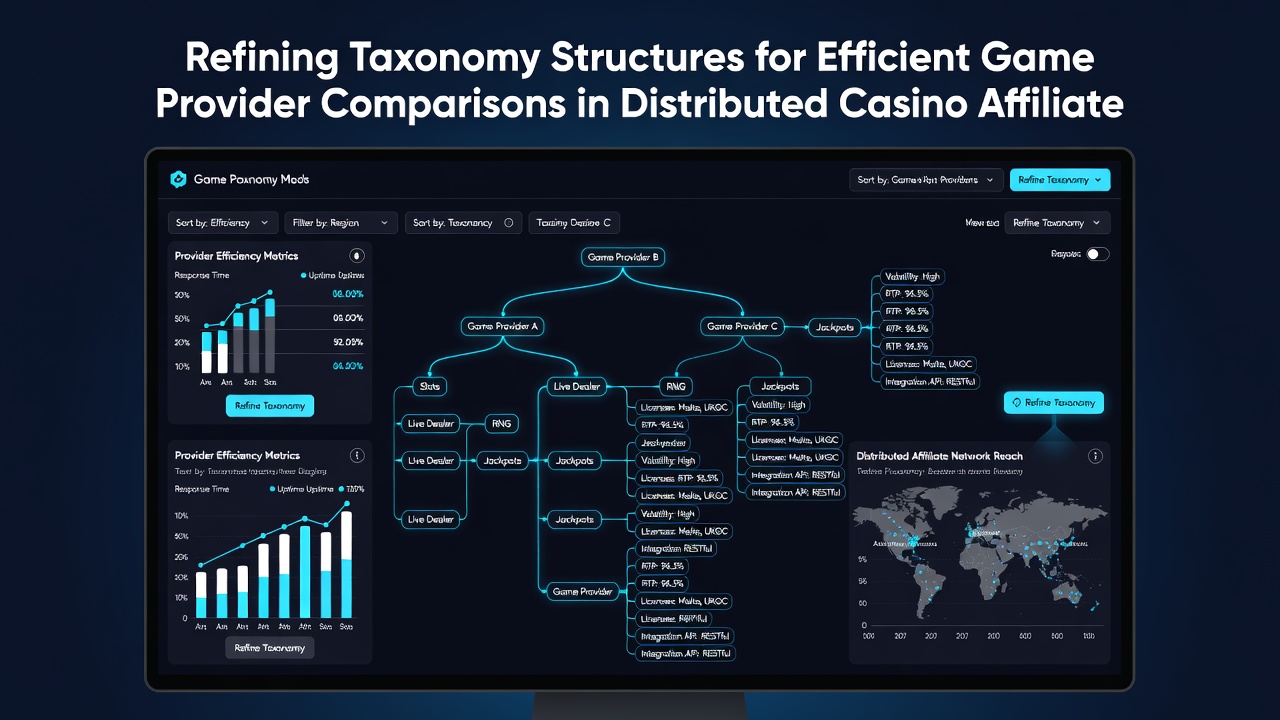
Teams begin by auditing existing provider metadata across all network nodes, then they map attributes such as game type, volatility range, RTP bands, and licensing jurisdiction into layered facets that support multi-criteria searches. This layered approach allows users to narrow results from broad categories like "slots" down to specific attributes like "high-volatility Megaways titles licensed in multiple North American markets," while automated validation scripts flag conflicts before they propagate through the network.
Implementation often includes controlled vocabularies maintained centrally yet editable at local levels under strict approval workflows, and case studies from large affiliate operators show that such vocabularies reduce mismatched provider listings by nearly 40 percent within the first quarter of deployment. What's interesting is how these structures also accommodate new providers entering the market without forcing complete re-categorization of legacy content.
Impact on Comparison Efficiency
Once refined taxonomies are in place, comparison engines can generate provider matrices that update in real time as new games launch or licensing status changes, and this capability proves especially useful during peak traffic periods such as major sporting events or holiday seasons. Figures from the Canadian Gaming Association indicate that affiliate sites employing structured taxonomies recorded a 27 percent increase in average session duration during October 2026 compared with the prior year, suggesting users spend more time exploring options when results appear consistently organized.
Network administrators further benefit because taxonomy updates can be pushed to all connected sites through scheduled synchronization rather than manual edits on each platform, which cuts administrative overhead while preserving data integrity across regions. Take one operator managing sites in both the United States and Australia who discovered that unified attribute tags eliminated repeated manual reconciliation of provider names that differed only by regional branding conventions.
Integration with Existing Affiliate Workflows
Successful refinement projects align taxonomy changes with existing content management pipelines so that editorial teams can tag new providers at the point of publication rather than through separate data-cleaning cycles. This integration requires mapping current provider databases to the new facet structure, testing search performance on sample queries, and training moderation staff on the updated ruleset before full rollout.
Industry reports from the Pagcor regulatory body in the Philippines highlight similar taxonomy standardization efforts among regional operators that produced measurable gains in cross-site provider visibility without requiring changes to underlying content delivery systems. And because the taxonomy lives at the data layer rather than the presentation layer, individual affiliate sites retain freedom to customize display formats while still drawing from the same structured source.
Conclusion
Refined taxonomy structures deliver measurable improvements in how distributed casino affiliate networks organize and surface game provider information for comparison purposes, and ongoing maintenance ensures these structures keep pace with market expansion and regulatory shifts. Organizations that invest in layered attribute systems and centralized vocabulary management position their networks to handle growing provider inventories while maintaining search precision across multiple sites and jurisdictions.